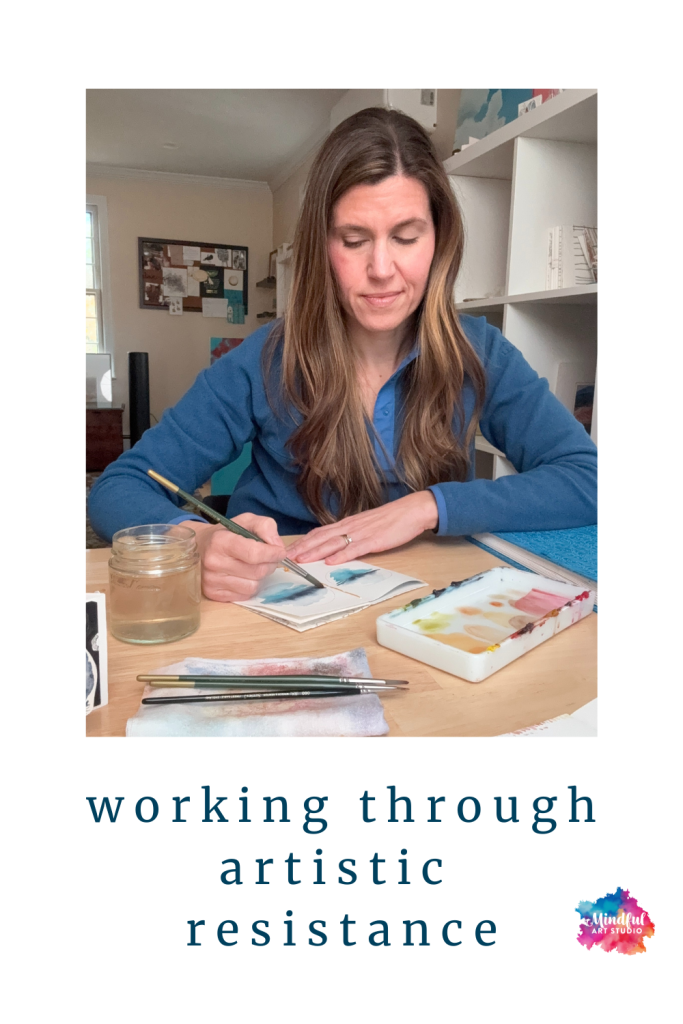
Working Through Artistic Resistance
Dear Wonderful, Creative You:
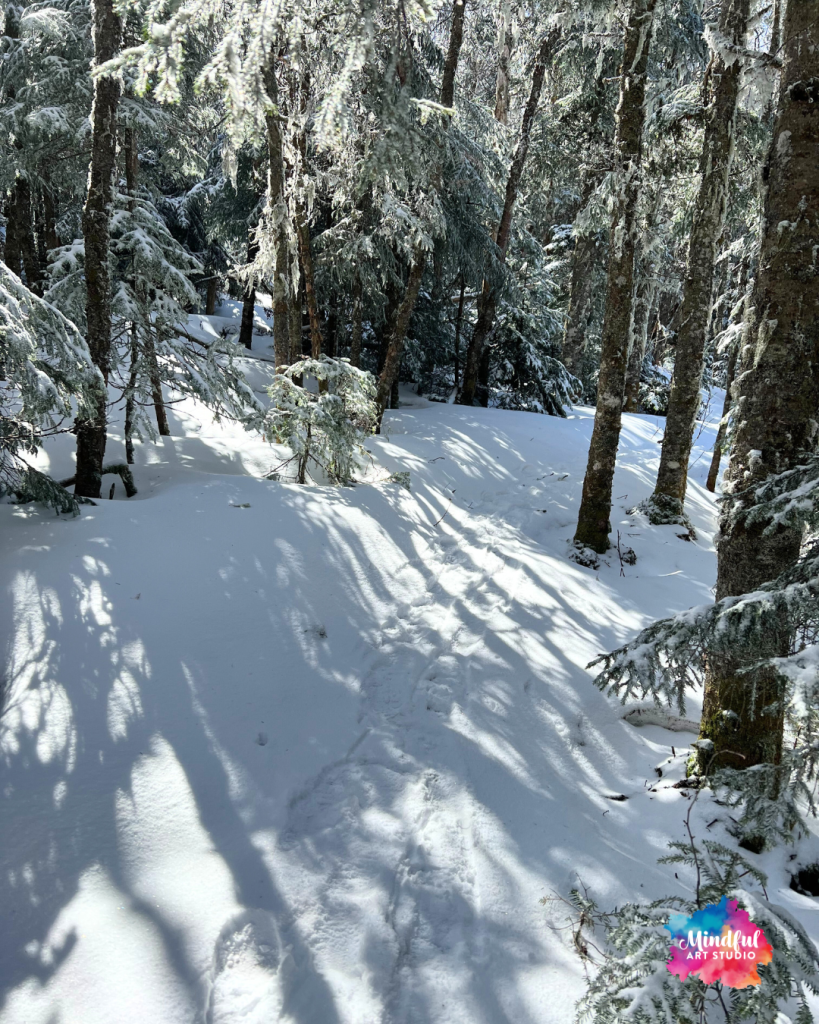
I know you might not share my opinion, but I love winter. I think it’s an incredibly beautiful time. When we are lucky enough to have snow, everything is coated in a white peacefulness, a stillness. And when you bend down and look closely at the leaves, dried flowers, and seed pods, the vibrant colors of spring, summer, and fall have gone away, leaving a subtle beauty that will reveal itself to you if you take the time to look.
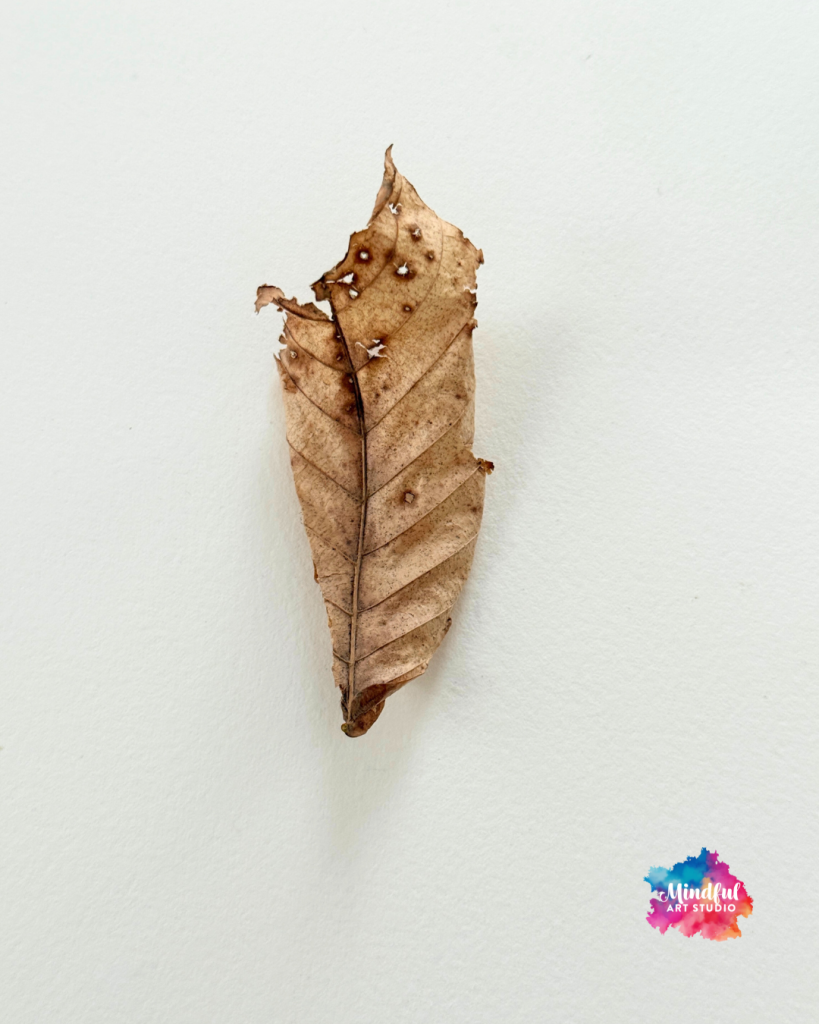
I had picked up a dried leaf a few weeks ago, and was looking forward to using layers of watercolor to depict the various tones of ochre, warm brown, and burnt umber.
Facing Artistic Resistance
But when I sat down to paint yesterday, the thought of having to map out an accurate drawing, complete with test drawings and measurements made me feel like not creating at all. (I don’t usually approach drawing quite this technically, but have been reading a wonderful book by Dianne Sutherland on botanical painting and I was wanting to employ her good advice, but also running into artistic resistance because of it.)
I paused to slow down my thoughts and better notice them. I’m well aware that if I ignore my creative frustration and push through anyway, I’m bound to make something I hate. This would only feed the fears of the inner critic who likes to go searching for evidence that we are not as capable as we thought.
I wondered if I should choose a different activity – painting an abstract watercolor landscape? Or drawing a repetitive pattern in my journal? But I wasn’t in the mood for those things. I wanted to paint. I wanted to study the leaf closely, mix my paint colors, and try to mimic what I saw in front of me. I love watching the pigment sink into the paper, and a form begin to appear, it always feels like a magic trick.
So instead of pushing myself, I asked a “What if?” question. What if I had permission to draw the leaf well, but not get hung up on making it 100% accurate? What if it did not have to be perfect, or nearly perfect? In the words of fellow sketchbook enthusiast Helen Wells, would that make it fun?
And voilà – that was the creative block I had put in my own way: if I was going to paint the leaf, I had to make a well studied, highly accurate drawing. While that might appeal to me some days, that day it sounded onerous and not fun at all. That unspoken “rule” was self-imposed and it was stopping me from even starting.
Once I released myself from my self-imposed artistic block, I was able to begin with a sense of fun instead of frustration. With a new sense of looseness, I drew my “close enough” version of my leaf, and quickly began adding in the first layers of paint.
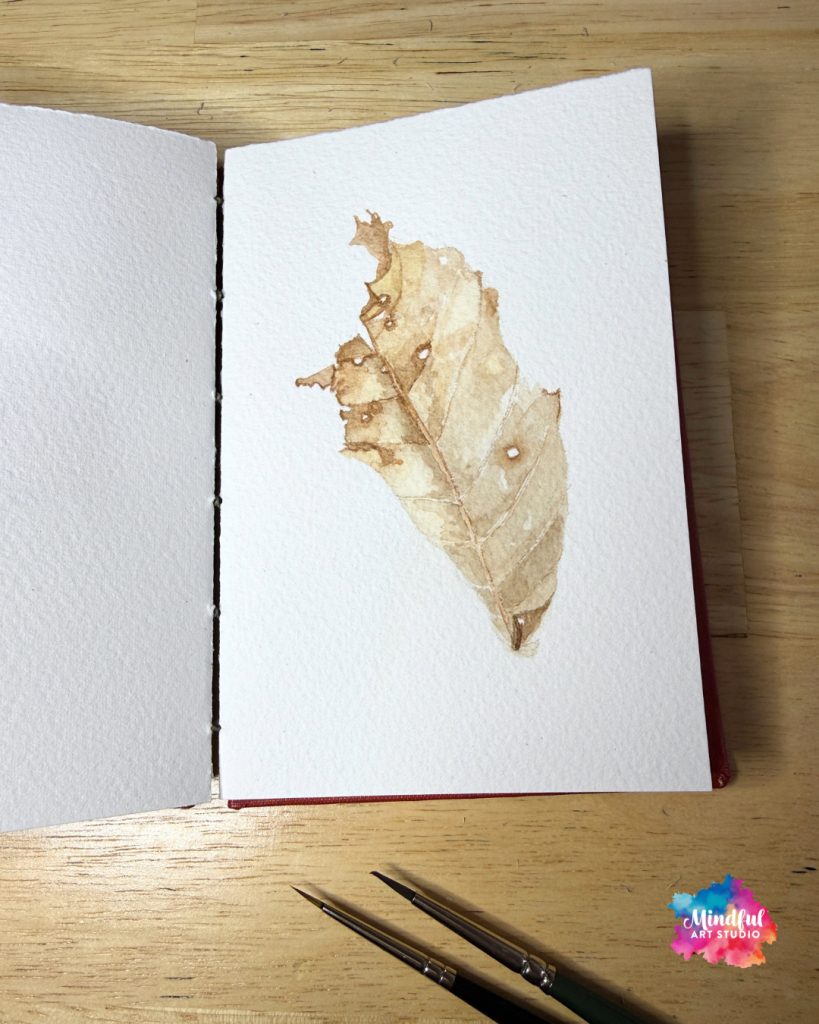
The drawing happened relatively quickly, and I was able to dig into painting. I especially enjoyed creating the little holes in the leaf and the crinkly, jagged edges with the stains around them. These are the “imperfections” that I find really beautiful. After a couple of hours yesterday, I had to move onto other projects.
The first session with this painting had gone well. I was pleased with what had emerged so far. So today, coming back after this promising beginning was scary. This is what I think about as “the tyranny of a good piece.” In this case, a different kind of what if question can sometimes emerge:
What if I mess it up?
What if I can’t pick up where I left off?
What if yesterday was a fluke and I can’t do it as well today?
For me, one of the things that helps me go back into an art piece is telling myself that it’s important to focus on process, and that it’s not yet as good as it could be, so I have nothing to lose. More often than not, I improve the piece, and even if I make a mistake, or push it too far, I haven’t ruined anything, because I will have learned so much that I will apply to the next art piece.
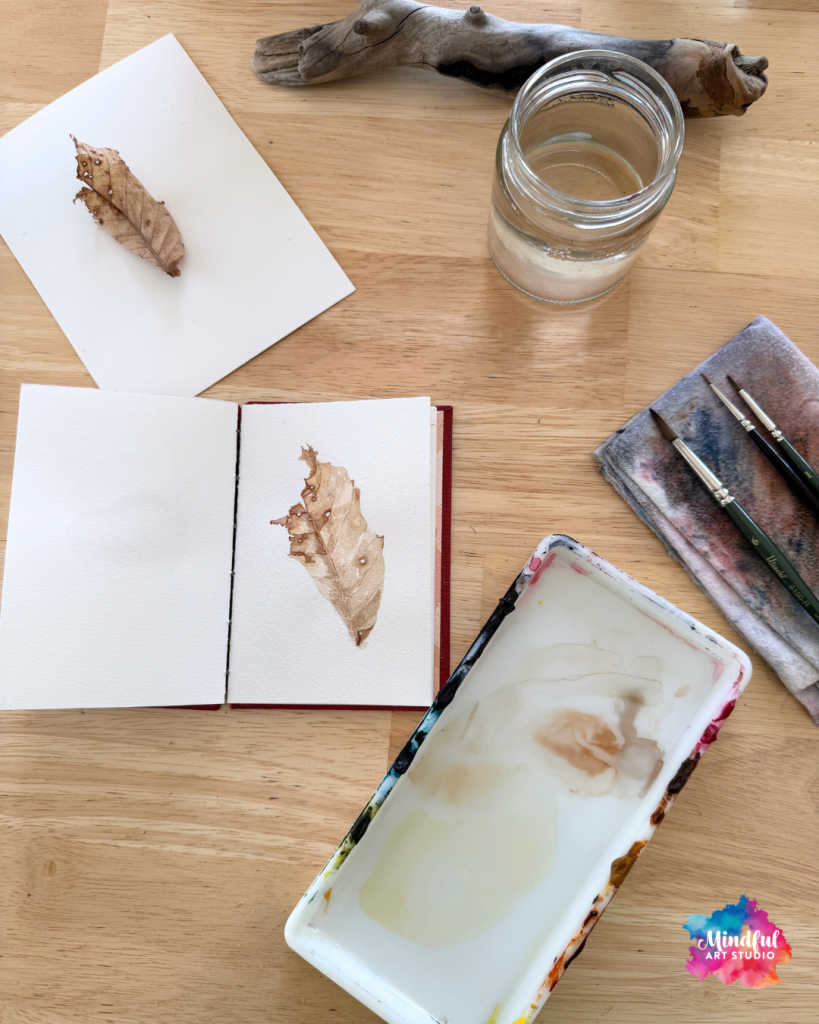
So I pressed on, inviting myself to paint with some loose, intuitive strokes that felt free, and only pulling out a magnifying glass to better understand what I was seeing. I enjoyed finding the dark areas around the veins of the leaf and on the leaf edges, and all the little dots. The last step was the drop shadows. These always scare me a bit, but again, I told myself I could only improve this painting or learn for the next, so I pressed on, enjoying hugging the side of my leaf with my grayish paint mix.
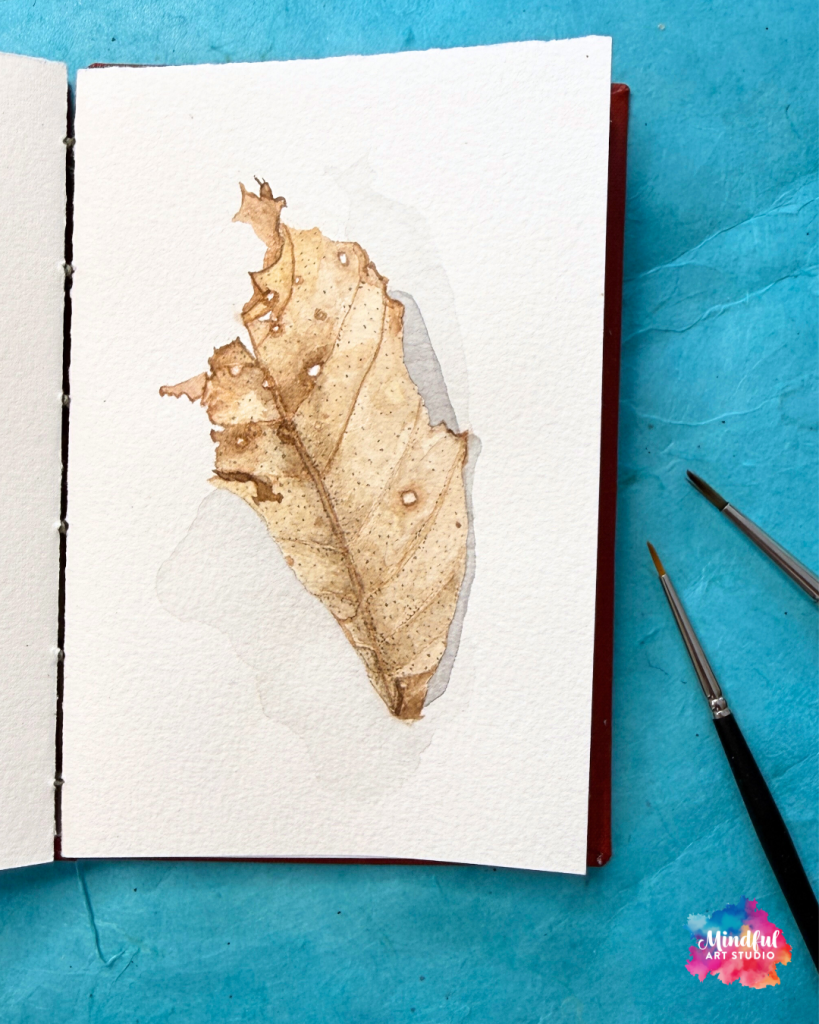
In the end I spent two very enjoyable mornings painting, that would have been lost if I hadn’t paused to examine what was getting in the way of me creating. This is the gift that slow drawing and slow art has given me – an ability to pause and consider what I’m thinking and feeling, to ask what if questions and see if I can find a happier way to live. What else can we ask for from our art process?
Share Your Experience in the Comments
What artistic blocks get in the way for you? How do you clear them? We would love to hear about it in the comments!
Creatively Yours,
Amy
30 Comments
Submit a Comment
Social

Connect
Join my newsletter for weekly inspiration, workshops, and ways to connect to nature through art.
Quick Links
Thank you for sharing your reflections. I found permission to simply be present to what I’m seeing and doing, with less focus on a final product. That message is one to re/visit over and over. Joy and wonder in the moment.
Hi Janet: Oh I’m so happy that my reflections help you to show up too! Cheers and happy creating!
I feel better hearing that you have those feelings of not being perfect. I am just doing what I like to do and go for it!
It’s important to hear that others feel those fears too! xo
it is beautiful and unique to you!
I appreciate your process, questions and honesty. Thank you for sharing.
HI Trisha: It’s so great to connect with you here. I’m so happy that witnessing the process is helpful. xo
Hi , thank uou for telling your silution of the art Block. I have this too. I notici g it that i does do less on mh art work. So often i think why does i do so less. I always have a problem then. So i must think why and what is the ptoblem. In the nean time i work on other work.
And when i have worked it out i cab start again.
Thinkung about feeding us sure a solution.
That is such a great reflection! Thank you so much for sharing and we’re glad this post helped you!
Thank you for sharing. I read most of your info – rarely comment. This was different. If I think too much about my subject – I get blocked. Sometimes I have to put color on paper to get started and let intuition take over.
Cynthia, I’m so happy that you took the opportunity to share your thoughts. I think putting color on the page is a great way to get started – thanks for sharing! xo
“…to pause and consider what I’m thinking and feeling, to ask what if questions and see if I can find a happier way to live.”
This is soooo timely for me because this pausing to rethink my responses is not only about my art but about my every life choice.
Thank you for your insight and for your sharing so aurhentically, Amy.
I’m so glad to hear that Francine, and yes I have to learn to pause generally too! One of those continual learning lessons of life I guess. xo
“What if I mess it up?”
I could so relate to this. I often stop, leave something as is, even though it isn’t really at full fruition, because I like it and don’t want to “ruin” it. Intellectually, I get it but I still stop.
Maybe it’s because I’m not confident that I can create what I like again because to be honest sometimes what I like is the result of a happy accident.
I really enjoyed your blog Amy and the leaf is lovely!!
Yes, Maryann, I think we have all felt this way. My hope is that by sharing about it that I might help someone else through it too!
hello,
I really recognize what you wrote. That is why I have several projects that are never finished. They are stored, waiting for me to pick it up again…………. Thanks all of you for sharing this. It helps me to recognize what I am doing , how I sabbotage my work.
Oh we all have a way of sabotaging! I’m so glad this spoke to you!
Thank you Amy. This is such a rich post. As you may recall (or not☺️), I keep an art journal just for helpful quotes, and this post filled a page.
For example, “… if I ignore my creative frustration and push through anyway, I’m bound to make something I hate. This would only feed the fears of the inner critic who likes to go searching for evidence that we are not as capable as we thought.”
I loved your discussion of “the tyranny of the good piece” – as this is where I get most stuck these days, and naming it is such a big help in addressing and overcoming it.
Thank you for generously sharing *your* vulnerability in all of this post, but especially “ These always scare me a bit, but again, I told myself I could only improve this painting or learn for the next, so I pressed on …”. Sometimes admitting fear is one of the finest trademarks of an excellent teacher, IMHO. And your framing of how to meet that fear is a lesson I’ve repeatedly found myself absorbing more and more of as I follow your guidance.
I used to be a person who was good with words that capture the essence of ideas in life. As I’ve been studying how to make visual art over the last year or so I’ve noticed that my ability with words is receding. Hopefully this transition will lead to better expressing myself through art. But it’s scary to go through a transition like this. I’m so grateful to have found your world, and to have been welcomed into it, because in addition to the artistic practice you teach, you are so gifted at writing and speaking with such clarity and wisdom.
Dear Doe – I find it interesting what you say about trading some of the ease with words for ease with imagery. It’s kind of poetic, don’t you think? And I’m very grateful that you have brought your thoughtful and expressive words and being to share with us in The Gathering. You articulate excellent conundrums and questions that are so helpful. And I so appreciate being seen. Thank you for taking the effort to tell me how I’ve been helpful so I can keep it up! All the best.
Wonderful insight! Thank you!
I’m so happy this spoke to you!
As an art teacher we always want to be perfect. To make sure we are truly prepared and engaged for our student(s). We forget WE are students to and need to be released.
Yes, so so true Debbie! xo
Hello from Maine, Amy. What if we just have fun? I was asked in December by my garden club to give a presentation in January which combined my tiny garden and beach photography with my journal painting. I used Prezi, an active presentation mode, and opened by telling them that I work small and often wonky with a shaky hand, but that I just have fun. Men and women alike were fascinated, and many expressed meeting in the future to ‘get them going’. Your lessons and attitude many years back have helped me continue forward with exploration and no excuses. I will always be grateful.
Oh Deborah – it’s always a joy to hear from you. I love this story you share – our wonky, shaky parts make for vulnerable, beautiful art in all forms. Thank you. xo
It seems like you gave your self permission to paint the energy of the leaf and how that leaf affected you that gave me permission to try to do the same thing I don’t have to be accurate
YES! I think having that permission to render things in the way that FEELS good is key to sticking with our art. If it’s not fun, why are we doing it? xo
You drew and painted a magnificent and very detailed leaf ! I like how you reason things out – observant of your own thoughts and motivations and rerouting your heart feeling of accomplishment and . . . joy!
Thank you Nazz! Yes, I feel really good about the whole process too! Thank you so much for being here, and I’m so glad this resonated. xo
Thank you Amy for this topic. As I read your note and the comments, I realized that my block is “I’ve already done that”. This keeps me from doing the repetition that makes a process your own. I will do something with that. Anne
HI Anne: It’s so nice to hear from you! Every great artist (as far as I know) has done a TON of repetition. It’s like Mary Oliver said – you only have to let the soft animal of your body love what it loves.